
Uncoated sintered neodymium magnets oxidize rapidly in humid or salt environments, losing up to 2-3% of Br per month due to intergranular corrosion. Two dominant coating systems protect bulk NdFeB magnets: nickel-copper-nickel (Ni-Cu-Ni) multilayer plating and epoxy resin coating. Ni-Cu-Ni provides superior mechanical hardness and electrical conductivity but suffers edge cracking under thermal shock. Epoxy coating delivers excellent chemical resistance and electrical insulation but has lower wear resistance. The correct selection depends on operating humidity, thermal cycling, and mechanical abrasion. The following data compares thickness standards, salt spray test results, and cost per kg.
Common Environmental Factors Causing Magnet Oxidation
NdFeB magnets contain neodymium-rich grain boundary phases that are electrochemically active. When exposed to humidity >60% RH at temperatures above 40°C, galvanic corrosion initiates at grain boundaries, progressing to surface pitting and powdering. Contaminants such as chlorides (salt spray, sweat), acids, or high pH solutions accelerate corrosion by 5-10x. For magnets used in outdoor sensors, marine equipment, or food processing machinery, an effective coating is mandatory.
Nickel Plating (Ni-Cu-Ni): Thickness Standards and Anti-Corrosion Principles
Ni-Cu-Ni is an electrolytic plating stack: first a nickel strike layer (2-5μm) for adhesion, then a copper interlayer (5-10μm) for corrosion barrier and thermal conductivity, finally a nickel top layer (5-10μm) for hardness and appearance. Total thickness ranges from 12-25μm depending on application.
Advantages of Ni-Cu-Ni:
Surface hardness: 400-600 HV, resistant to scratches and handling damage.
Conductive: suitable for magnets that require grounding or EMC shielding.
Salt spray resistance: typically 24-72 hours (ASTM B117) before red rust appears.
Operating temperature: stable up to 200°C continuously.
Limitations: Under thermal cycling from -40°C to 150°C, the copper layer expands and contracts differently than NdFeB, leading to edge peeling after 500-1000 cycles. Also, Ni-Cu-Ni is not food-contact approved in some regions due to nickel ion release.
Epoxy Coating Performance in Extreme Salt Spray Tests
Epoxy coating is applied by spray or electrostatic deposition, then heat-cured at 150-200°C. Typical thickness: 20-40μm (standard) or 50-100μm (heavy-duty). Epoxy is non-conductive (surface resistivity >10^12 Ω/sq), preventing electrical shorts in stacked magnet assemblies.
Epoxy advantages:
Salt spray resistance: 200-500+ hours (ASTM B117) with proper edge coverage. For offshore or chemical environments, epoxy outperforms Ni-Cu-Ni by 3-5x.
Chemical resistance: withstands dilute acids, alkalis, oils, and cleaning solvents.
Temperature range: -40°C to 150°C continuous (special grades to 180°C).
Lower cost per unit area: bulk epoxy coating is 15-25% cheaper than Ni-Cu-Ni.
Limitations: Epoxy is softer (60-80 Shore D), vulnerable to scratching from metal-on-magnet contact. Once scratched, corrosion wicks under the coating. Epoxy also outgasses under vacuum (>10^-3 Pa), unsuitable for high-vacuum applications.
Comparative Data: Salt Spray Hours, Thickness, and Wear Resistance
| Property | Ni-Cu-Ni (12-20μm) | Epoxy (20-40μm) | Engineering Consideration |
|---|---|---|---|
| ASTM B117 salt spray (hours to red rust) | 24-72 | 200-500 | Epoxy wins for marine/humid environments |
| Coating hardness | 400-600 HV | 60-80 Shore D | Ni-Cu-Ni resists handling scratches |
| Electrical conductivity | Conductive (<0.1 Ω) | Insulating (>10^12 Ω) | Choose epoxy for stacked magnets to avoid short circuits |
| Max continuous temperature | 200°C | 150°C (std) / 180°C (Hi-Temp) | Ni-Cu-Ni for hot motor interiors |
| Thermal cycle endurance (-40°C to 150°C) | 500-1000 cycles (edge peel) | >2000 cycles (no cracking) | Epoxy for cold climate or refrigeration |
| Food contact approval | FDA restricted (Ni ion) | FDA compliant (some grades) | Epoxy for food processing equipment |
| Relative coating cost (per kg magnets) | 1.0 (baseline) | 0.75-0.85 |

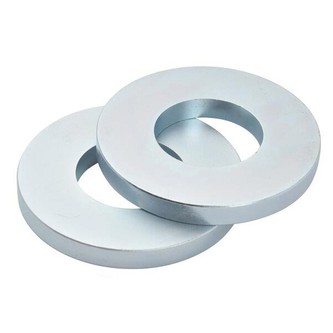
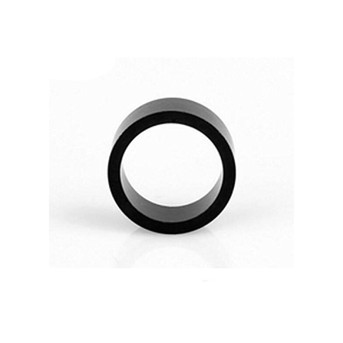
For bulk neodymium magnet orders used in automotive sensors (under-hood, high humidity, moderate temperature), we recommend Ni-Cu-Ni with 15μm minimum thickness. For marine instruments, food machinery, or outdoor signage (constant moisture, low abrasion), epoxy coating is the correct choice. For hybrid environments (e.g., industrial actuators with occasional washdown), consider double-layer: Ni-Cu-Ni base plus epoxy topcoat.
Our standard bulk magnet supply includes 100% eddy current testing of coating integrity (holiday detection). We also offer alternative coatings: zinc plating (low cost, 12-24h salt spray), gold plating (medical), and Parylene (vacuum/MEMS). Visit our Magnet Materials product page to browse available coatings.
To request coated samples for your specific environment – including your required salt spray hours and temperature range – contact our coating engineering team. We provide free corrosion test coupons with your next sample order.
Frequently Asked Questions
Q: Can I use Ni-Cu-Ni coated magnets in a food processing magnetic separator?
A: Not recommended. Nickel ions can leach under wet acidic conditions. Use epoxy-coated magnets with FDA-compliant epoxy (21 CFR 175.300). We provide certification upon request.
Q: How do I test if the epoxy coating on my delivered magnets is fully cured?
A: Perform a methyl ethyl ketone (MEK) rub test: 10 double rubs with a cotton swab soaked in MEK. No color transfer or softening indicates proper cure. We include lot-specific cure records with each shipment.
Q: What is the lead time for bulk epoxy-coated magnets vs. Ni-Cu-Ni?
A: Ni-Cu-Ni: 10-15 working days for 500-2000 pcs (batch plating). Epoxy coating: 15-20 working days because of heat-curing and 100% pinhole inspection. Rush orders (5-7 days) available for both.


