
How Fluid Viscosity Affects Magnetic Interception
Viscosity determines the drag force on ferrous particles approaching a magnetic tube. For low-viscosity fluids (water, milk, juice, viscosity <100 cP), magnetic force overcomes drag when the magnetic energy gradient exceeds 10^5 T²/m. Capture efficiency for 50μm iron particles exceeds 95% at flow velocities below 1.5 m/s. For high-viscosity fluids (syrups, pastes, chocolate, viscosity 1,000-50,000 cP), drag forces increase by 10-100x. To maintain 90% capture efficiency, either reduce flow velocity to 0.3-0.5 m/s or increase magnetic tube surface field from 8,000 Gauss to 12,000 Gauss using N50 grade neodymium.
For viscous slurries with particulate solids (e.g., tomato paste, peanut butter), magnetic tubes with extended dwell time (using staggered tube arrays) improve interception. Minimum tube spacing should be 2x the largest particle diameter to prevent bridging.
Gauss Values vs. Surface Magnetic Field Strength
Gauss readings measure the magnetic flux density at a specific point on the separator tube surface. A standard tube equipped with N42 neodymium magnets delivers 8,000-10,000 Gauss at the tube surface. However, magnetic field strength decays rapidly with distance: at 5mm from the tube surface, Gauss drops to 2,000-3,000 (approximately 70% reduction). Therefore, for large-diameter pipes (e.g., 150mm ID), a single center-mounted tube leaves the outer flow region unprotected. The solution: multiple smaller tubes (25mm OD each) arranged in a grid, ensuring that every fluid stream passes within 10mm of a magnet surface.
For bulk dry powders (flour, sugar, spices), magnetic tubes with 12,000 Gauss surface field and aggressive raking or vibratory cleaning mechanisms are recommended. Powder bridging reduces effective separation distance; gap between tubes should not exceed 40mm.
Formula for Matching Pipe Diameter with Magnetic Tube Spacing
For a circular pipe with a single magnetic tube bundle (e.g., 2-5 tubes in a housing), the rule of thumb: maximum distance from any fluid point to the nearest magnet surface = tube radius + (pipe ID - bundle envelope)/2. For 90% capture of 100μm iron particles, this distance must be ≤15mm for 8,000 Gauss tubes, or ≤25mm for 12,000 Gauss tubes.
Standard configurations we supply:
| Pipe Inner Diameter | Magnetic Tube Configuration | Tube OD | Max Unprotected Gap | Recommended Flow Velocity |
|---|---|---|---|---|
| 50mm | 1 tube, center | 25mm | 12.5mm | up to 2.0 m/s |
| 100mm | 3 tubes, triangular | 25mm | 20mm | up to 1.2 m/s |
| 150mm | 5 tubes, cross pattern | 25mm | 18mm | up to 1.0 m/s |
| 200mm | 7 tubes, hexagonal | 25mm | 15mm | up to 0.8 m/s |
For sanitary food applications, all magnetic tubes must have 0.4μm Ra surface finish and be made of 316L stainless steel with FDA-compliant seals.
Routine Maintenance and Magnetic Degradation Testing
Neodymium magnets in separators experience gradual demagnetization from temperature (product temperature >80°C), vibration, and corrosion. Standard N42 grade loses 5-10% of Br over 5 years in normal use. Annual testing using a calibrated Gauss meter at a fixed reference point on each tube is mandatory for HACCP compliance. Replacement threshold: when surface Gauss drops below 70% of original value (e.g., from 10,000 to 7,000 Gauss).
For cleaning, never use steel brushes or abrasive pads – they scratch the stainless steel jacket, creating crevices for bacterial growth. Use nylon brushes and food-grade detergent. Disassemble and inspect seals every 3 months for CIP (clean-in-place) systems.
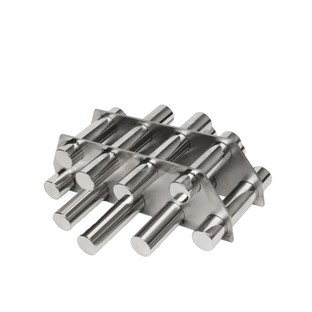
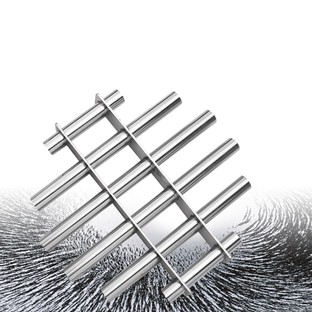
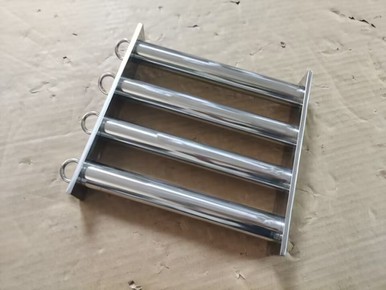
For food processing plants requiring magnetic separators with EHEDG certification and 3-A sanitary standards, please refer to our Magnetic Separation & Filtration product page on our website. We provide magnetic strength test certificates with each unit, including Gauss measurements at five points per tube.
To discuss your product viscosity, flow rate, and target particle size, contact our separation engineering team. We offer free flow simulation and capture efficiency estimation.
Frequently Asked Questions
Q: How often should I replace magnetic tubes in a separator processing hot oil (120°C)?
A: For neodymium magnets, operating at 120°C reduces expected life to 12-18 months. Use SmCo magnets (max temp 350°C) instead. We supply SmCo-based separators for high-temperature applications with 5-year warranty on demagnetization.
Q: What is the minimum iron particle size your magnetic separators can capture?
A: For standard 8,000 Gauss tubes, reliable capture down to 30μm iron particles. For 12,000 Gauss tubes (N50 grade), capture down to 10μm. Below 10μm, use a high-gradient magnetic separator (HGMS) with steel wool matrix.
Q: Do you provide magnet inspection kits for in-house performance verification?
A: Yes. We offer a portable Gauss meter kit with NIST-traceable calibration, plus magnetic field viewing film. Price: $450 per kit including carrying case and operator manual.


