Introduction
Ferrite magnets, also known as ceramic magnets, are one of the most widely used types of permanent magnets in the industrial sector. Known for their affordability, corrosion resistance, and stability, ferrite magnets offer an excellent balance of performance and cost. For buyers seeking a reliable ferrite magnet supplier, understanding their advantages, applications, and differences from rare-earth magnets is essential.
This guide provides a detailed overview of ferrite magnets for motor applications, electronics, and other industrial uses.
What Are Ferrite Magnets?
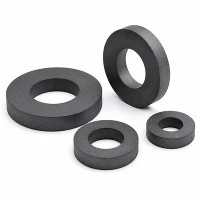
Ferrite magnets are made primarily from a combination of iron oxide and barium or strontium carbonate. They are ceramic in nature, which makes them highly resistant to corrosion and suitable for long-term industrial applications.
Key features include:
- Chemical composition: BaFe₁₂O₁₉ (barium ferrite) or SrFe₁₂O₁₉ (strontium ferrite)
- Magnetic strength: Moderate, weaker than neodymium or samarium cobalt magnets
- Temperature stability: Can typically operate up to 250°C without loss of performance
- Cost: Low, making them ideal for mass-production applications
Advantages of Ferrite Magnets
1. Cost-Effective
One of the biggest advantages of ferrite magnets is their low production cost. This makes them a preferred choice in motors, speakers, and consumer electronics, where large quantities of magnets are required without increasing the product price.
2. Corrosion Resistance
Ferrite magnets are naturally resistant to corrosion, which eliminates the need for coatings or surface treatments in most applications. This is a significant benefit for environments where moisture or humidity is a concern.
3. Temperature Stability
Ferrite magnets maintain their magnetic properties over a wide range of temperatures, typically up to 250°C. This allows them to perform reliably in motors, electronics, and other industrial equipment.
4. Availability in Various Shapes and Sizes
Ferrite magnets can be produced in blocks, discs, rings, and custom shapes. This versatility enables manufacturers to design compact motors and devices without compromising magnetic performance.


Ferrite Magnets vs Rare-Earth Magnets
While ferrite magnets are cost-effective, it's important to understand how they compare to rare-earth magnets like neodymium or samarium cobalt:
- Magnetic Strength: Rare-earth magnets are much stronger than ferrite magnets. For applications that require high power in small volumes, neodymium is preferred.
- Temperature Resistance: SmCo magnets can withstand extreme heat, while NdFeB magnets require special grades for high temperatures. Ferrite magnets have good stability but moderate magnetic strength.
- Cost: Ferrite magnets are far more affordable than NdFeB or SmCo magnets, making them ideal for high-volume manufacturing.
- Corrosion: Ferrite magnets are naturally resistant to corrosion, whereas NdFeB magnets require protective coatings.
In summary, ferrite magnets are ideal for applications where moderate strength, reliability, and cost efficiency are more important than maximum magnetic performance.
Applications of Ferrite Magnets
1. Motors and Generators
Ferrite magnets are widely used in electric motors, particularly in household appliances, fans, and small industrial equipment. Their cost-effectiveness makes them ideal for mass-produced motors.
2. Electronics
Consumer electronics such as speakers, microphones, and magnetic sensors often use ferrite magnets. They provide stable magnetic fields at an affordable price.
3. Magnetic Separation Systems
In recycling, food processing, and industrial production lines, ferrite magnets are used to separate ferrous materials from non-magnetic substances.
4. Magnetic Assemblies
Ferrite magnets are often integrated into assemblies for automation equipment, sensors, and magnetic couplings, where large quantities of magnets are needed economically.
Choosing a Reliable Ferrite Magnet Supplier
When sourcing ferrite magnets for motor or other applications, it's crucial to work with a professional ferrite magnet supplier. Key considerations include:
- Quality Control – ISO-certified suppliers ensure consistent magnet strength, size, and performance.
- Customization Services – Suppliers should provide custom shapes, sizes, and magnetization directions for specific motor or electronic designs.
- Material Specifications – Detailed information on coercivity, remanence, and temperature resistance is essential for industrial buyers.
- Export Experience – Global buyers benefit from suppliers who understand international shipping regulations, packaging standards, and customs compliance.
Ferrite magnets offer a perfect balance of cost, reliability, and versatility for industrial and consumer applications. While they may not match the magnetic strength of rare-earth magnets, their affordability, corrosion resistance, and temperature stability make them ideal for motors, electronics, and large-scale production.
Partnering with a professional ferrite magnet supplier ensures access to high-quality magnets, technical support, and customized solutions, allowing manufacturers to optimize both performance and production costs.