
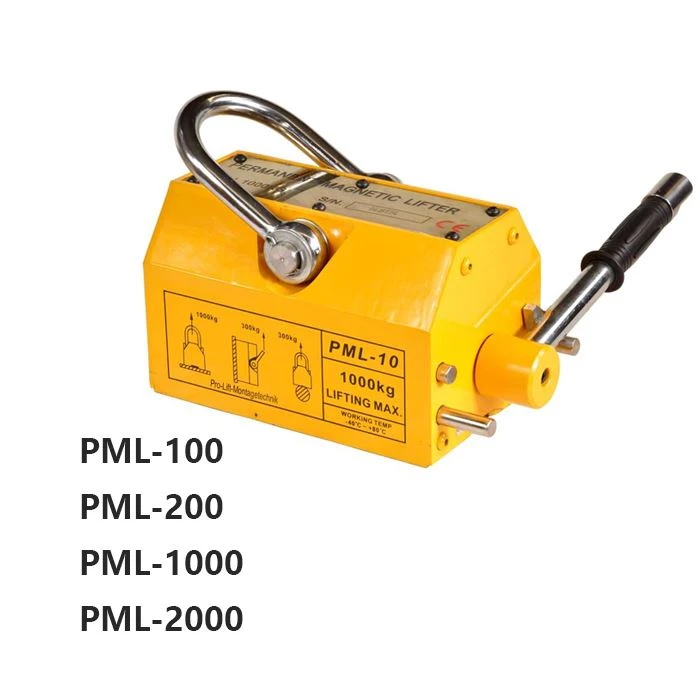


Permanent Magnetic Lifter
What Is Permanent Magnetic Lifter?
A permanent magnetic lifter is a lifting attachment that creates a magnetic holding force between its pole face and a ferromagnetic load. It is normally suspended from a crane, hoist, or other suitable lifting machine through its lifting eye or attachment point.
How Does Permanent Magnetic Lifter Work?
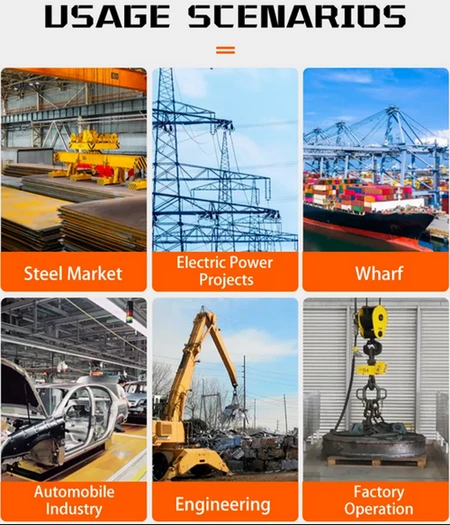
Permanent Magnetic Lifters are mainly used to lift steel plates, blocks, press moulds etc. and load / unload in machines during handling operation. They can hoist moving iron blocks and other magnetic material. They are easy to operation and safe to handle and hence are widely used as lifting devices in factories, docks, warehouses and transportation industries. By using them, you can improve your working condition and increase your working efficiency.
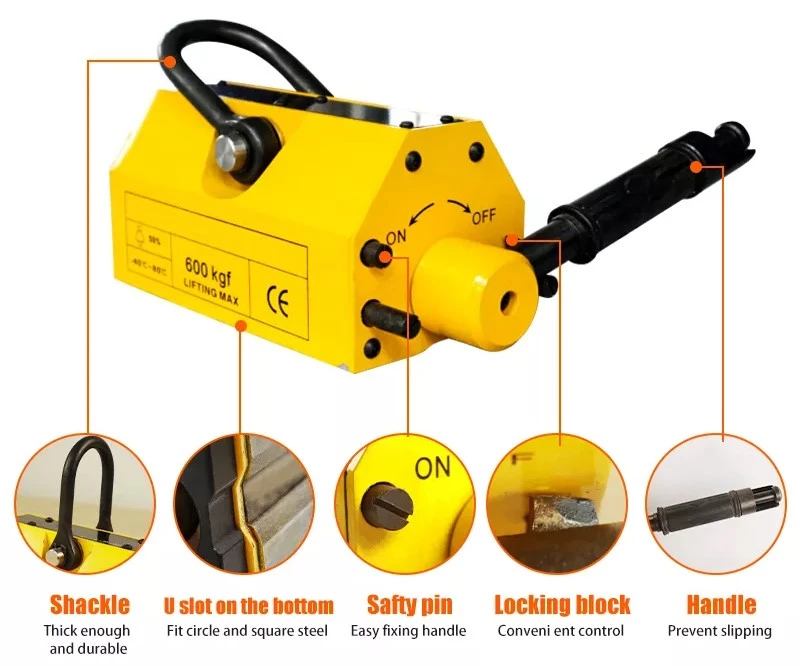
Description of magnetic lifting
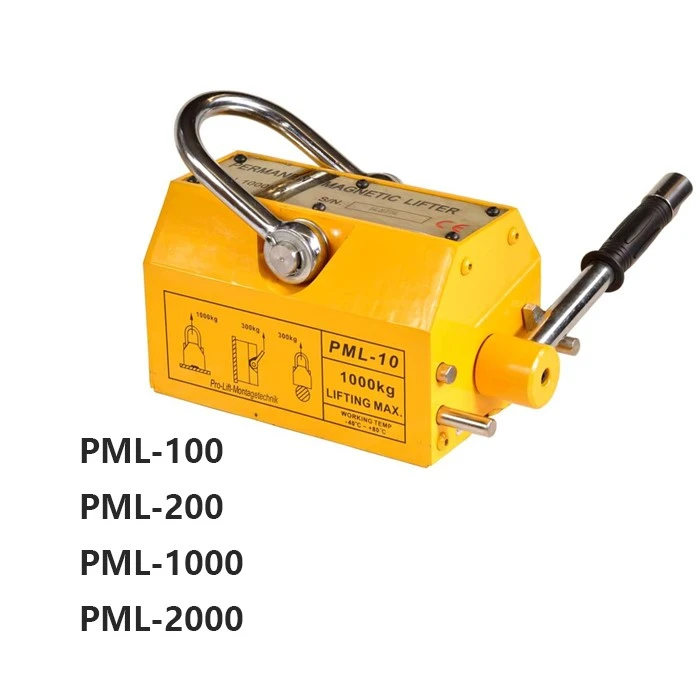
Permanent Magnet Lifters have strong magnetic field path produced by NdFeB Magnetic materials. "On" and "Off" of the magnetic path is controlled by turning the lever manually. There are shackles on the top of Magnetic Lifter for lifting.
Benefits:
Lifting Magnets use space more effectively. Eliminates the need to gauge and increase stacking height
As less as one operator can move large and heavy work piece safely and easily using Magnetic Lifters
Lifting Magnets saves labour and time – improves productivity
Operating Instructions:
The work piece surface (magnetic ferrous surface) and magnet pole surface must be clean and smooth to achieve maximum efficiency. Ground and machined surface are ideal but a good clean surface on a ferrous or casting is acceptable provided a sufficiently flat area available for good magnetic contract with the work piece.
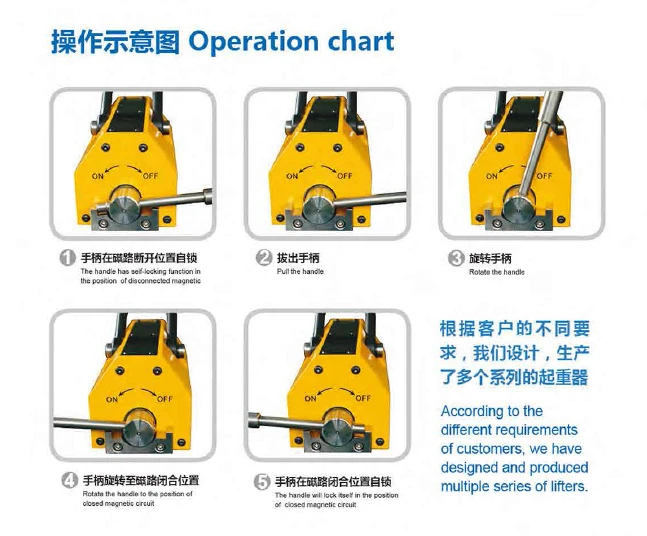
- In the ON position, magnetic flux is directed through the pole face and the load.
- In the OFF position, the flux is largely redirected within the lifter so the load can be released.
- A mechanical lock or latch helps prevent unintended handle movement while the magnet is engaged.
Features of Magnetic Lifter
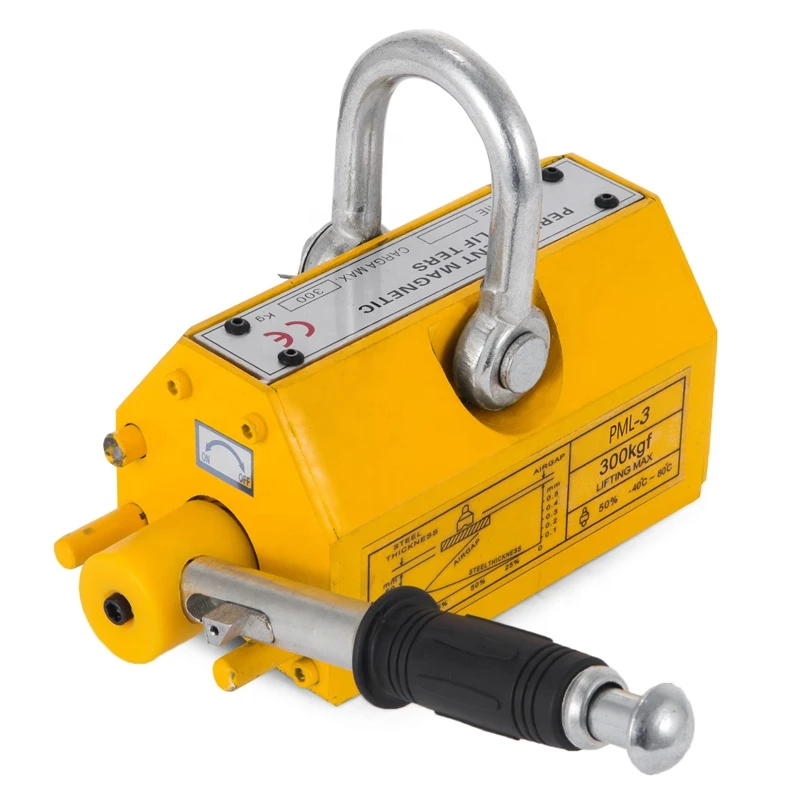
- Zero electricity required
- Forged hook for high mechanical strength and durability
- Precision machined assembly block in single piece to enhance efficiency
- Designed for safety and light weight
- Full proof locking system with an easy to use "on" and "off" lever
- 3 times rated capacity factor of safety to meet the safety standards as per international standards for under the hook devices
- No Maintenance and Operating cost
- No damage to the work piece being lifted
- Very Compact
Package for magnetic lifter

What Materials Can It Lift?
Typical applications include:
-
steel plate and blocks;
-
dies, machine parts, and suitable cast or forged components;
-
flat stock at cutting and machining stations;
-
round bar or pipe when the magnet has an approved pole shape and a separate round-load rating.
Company information
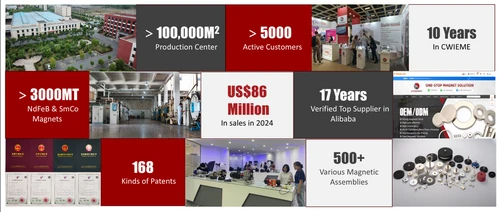
Our company is a 20-year professional manufacturer of high-performance sintered NdFeB neodymium magnets, certified to ISO 9001, IATF 16949, CE and RoHS. With 13 production machines and full in-house quality traceability, we supply N35-N52 grade magnets for automotive, motor, consumer electronics and industrial applications, offering drawing-based customization and serving buyers in North America, Western Europe and Eastern Europe.
FAQ
Q1: Does a permanent magnetic lifter need electricity?
Most manual permanent lifting magnets do not need external electrical power to hold the load. Their magnetic circuit is switched mechanically. This avoids power-loss release associated with ordinary electric magnets, but it does not make the lift independent of material, contact, capacity, inspection, or operating conditions.
Q2: Can it lift stainless steel?
Not as a general rule. Stainless steels vary greatly in magnetic response. Some grades are effectively non-magnetic for lifting, and others may not provide the performance assumed by the load chart. Confirm the exact material and obtain technical approval for the intended device.
Q3: Can the flat-load rating be used for round bar or pipe?
No. Round loads have different contact geometry and normally require a magnet designed for that shape, with a separate capacity and diameter range. Use the manufacturer's round-load chart.
Q4: Is a test lift enough to prove the magnet is suitable?
No. A controlled low lift can help reveal imbalance or poor attachment, but it does not replace material identification, capacity calculation, surface assessment, inspection, instructions, or a properly planned lifting operation.
Hot Tags: permanent magnetic lifter, lifting magnet, manufacturers, suppliers, factory, customized


